Species Guides6 min readSpecies Guide · Costa Rica
Cubera Snapper Fishing in Quepos — The Complete Guide
The strongest fish on the reef — where cubera snapper hold near Quepos, when they bite best, and how to pull one out of the rocks before it cuts you off.
Costa Rica Fishing Company
Quick Answer
- Cubera snapper live around the rocky points and reefs along the Quepos and Manuel Antonio coast and can be caught year-round, with the most action in the green season, roughly June through October. They are the largest snapper in the eastern Pacific and fight hard toward the rocks, so heavy inshore tackle is a must. Book a Half-Day or 3/4-Day Inshore charter; cubera can be kept and make excellent table fare.
Why Cubera Snapper Are Quepos' Toughest Inshore Fight
Roosterfish get the photos, but ask any inshore captain which fish tests anglers hardest and the answer is often the cubera snapper. It is a thick, powerful reef predator with heavy jaws and canine teeth, and the moment it feels the hook it heads straight for the nearest rock.
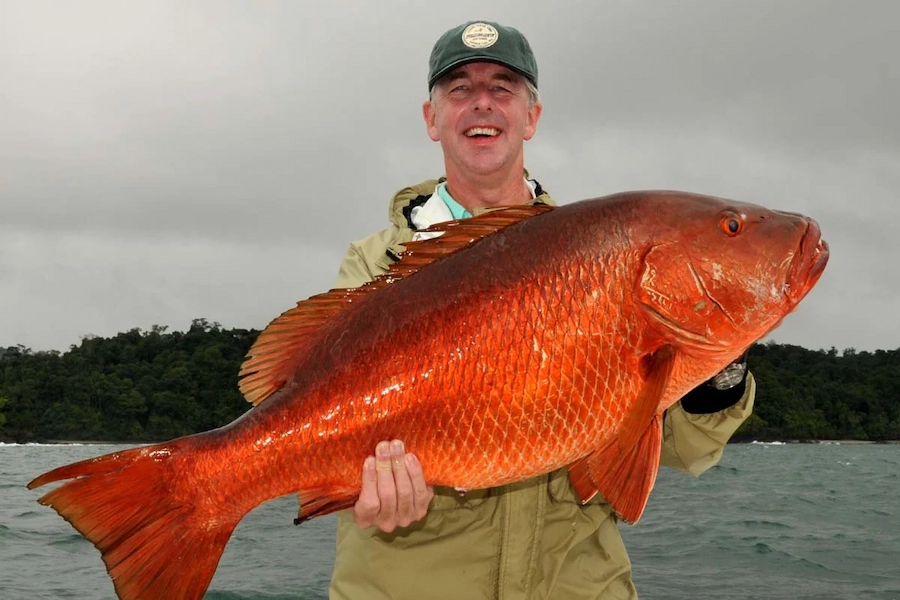
On Costa Rica's Pacific coast the fish anglers call cubera is the Pacific cubera, also known as the Pacific dog snapper or pargo dientón. It is the largest snapper in the eastern Pacific, and the all-tackle world record for the species — 78 lbs 12 oz — was caught in Costa Rica.
Best Time for Cubera Snapper in Quepos
Cubera snapper are resident reef fish, so they can be caught in Quepos every month of the year. The most consistent action comes in the green season, roughly June through October, when warmer water and more bait close to shore keep them active along the rocky points.
Time of day matters too. Early mornings and the afternoon are both productive on the reef, which is why our Half-Day Inshore charter offers a 7:00 AM and a 1:00 PM departure.

Where Cubera Snapper Live Near Quepos
Adults hold on rocky reefs, ledges and boulder fields, usually in fairly shallow water — most often around 5 to 12 meters (15 to 40 feet). Along the Quepos and Manuel Antonio coastline that means the rocky points, offshore rocks and reef structure our captains fish on inshore trips. Young cubera grow up in mangroves, estuaries and river mouths before moving out to the reef.
How We Target Cubera Snapper
Cubera feed on crabs, shrimp and fish, so live bait fished tight to the structure is the most reliable approach; jigs and topwater lures worked along the rocks can also draw explosive strikes. Heavy line and a locked-down drag are essential: the angler has only a few seconds to turn the fish's head before it reaches the rocks and cuts the line.
Size and the Fight
Sizes vary widely, and any cubera over 50 lbs is a true trophy. The species can grow to about 1.7 meters (5.5 feet) and more than 75 lbs. Whatever the size, the fight is short and brutal rather than long: a heavy first run toward the bottom, then a tug-of-war to keep the fish out of the structure.
Cubera Snapper on the Table
Unlike roosterfish, which are generally released, cubera snapper are a keeper species and excellent eating, with firm white fillets that are perfect grilled, fried or as ceviche. Our crew will clean and fillet your catch at the end of the trip so it's ready for your hotel kitchen or a local restaurant.
Which Charter Is Best for Cubera Snapper?
Cubera live close to shore, so they are an inshore target. Our Half-Day Inshore charter (5 hours, 7:00 AM or 1:00 PM) is a great way to fish the reef, and the 3/4-Day Inshore charter (7 hours) gives your captain time to work more rocky points and combine cubera with roosterfish and jack crevalle.
Cubera Snapper at a Glance
Here are the key facts, at a glance:
- Available: year-round
- Most active: green season, about June–October
- Where: rocky points and reefs, often 5–12 m deep
- Technique: live bait tight to structure, jigs, topwater
- Best charter: Half-Day or 3/4-Day Inshore
- Table quality: excellent — can be kept
More local fishing guides on our partner site: quepossportfishing.com

Costa Rica Fishing Company
Expert Local Fishing Guides — Quepos, Costa RicaOur team of experienced local captains and fishing guides has been operating out of Marina Pez Vela for years. We share our knowledge of the local fishery to help anglers plan the perfect Costa Rica fishing trip.
Frequently Asked Questions
Cubera Snapper — Common Questions
Keep Reading
More Fishing Tips & Guides
How to Avoid Seasickness on a Fishing Charter — 10 Tips
September 22, 2026 · 6 min read
Blue Marlin Fishing in Quepos — Season, Tactics & Charters
August 4, 2026 · 7 min read
How to Plan a Fishing Trip to Costa Rica — Step-by-Step Guide
August 18, 2026 · 7 min read
Private Sport Fishing · Marina Pez Vela
Ready to Fish Costa Rica?
Private charters available every day of the year from Marina Pez Vela. Expert local captains, all tackle included, hotel pickup available.